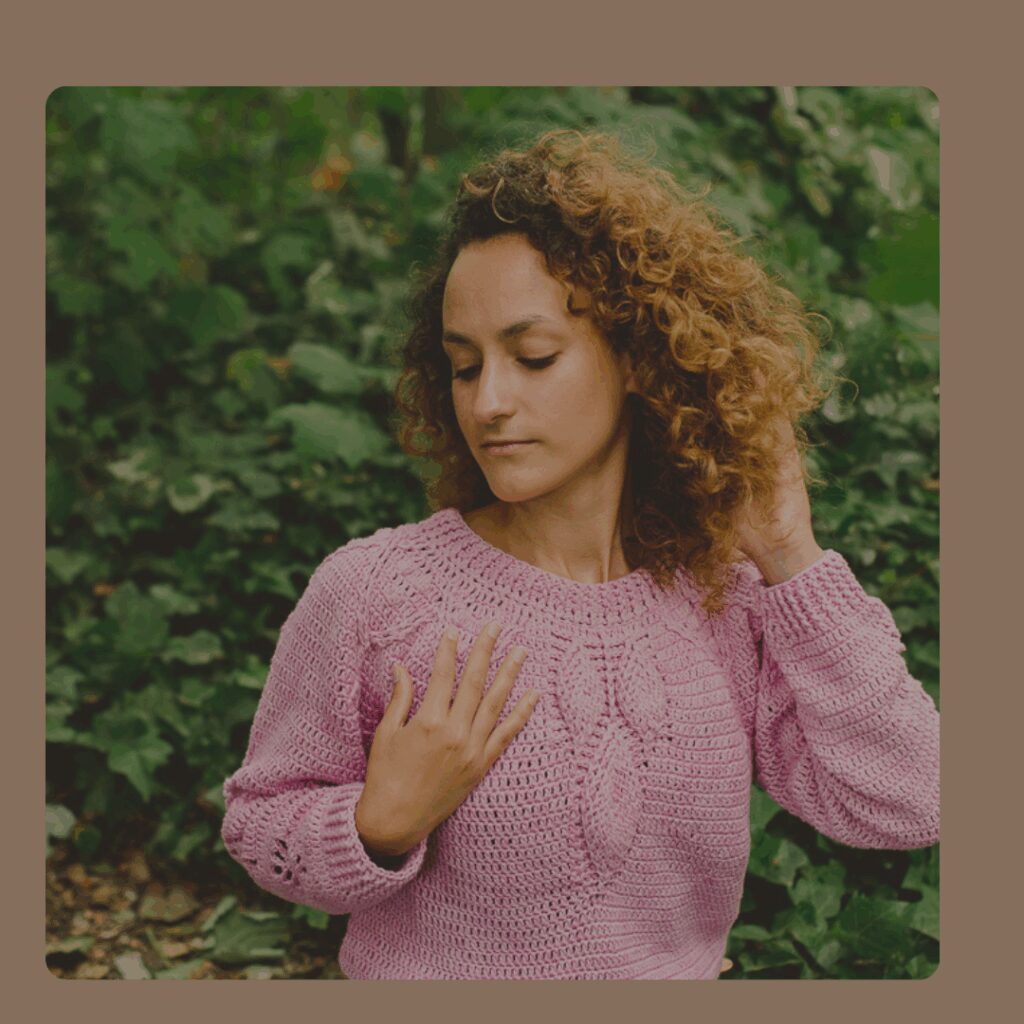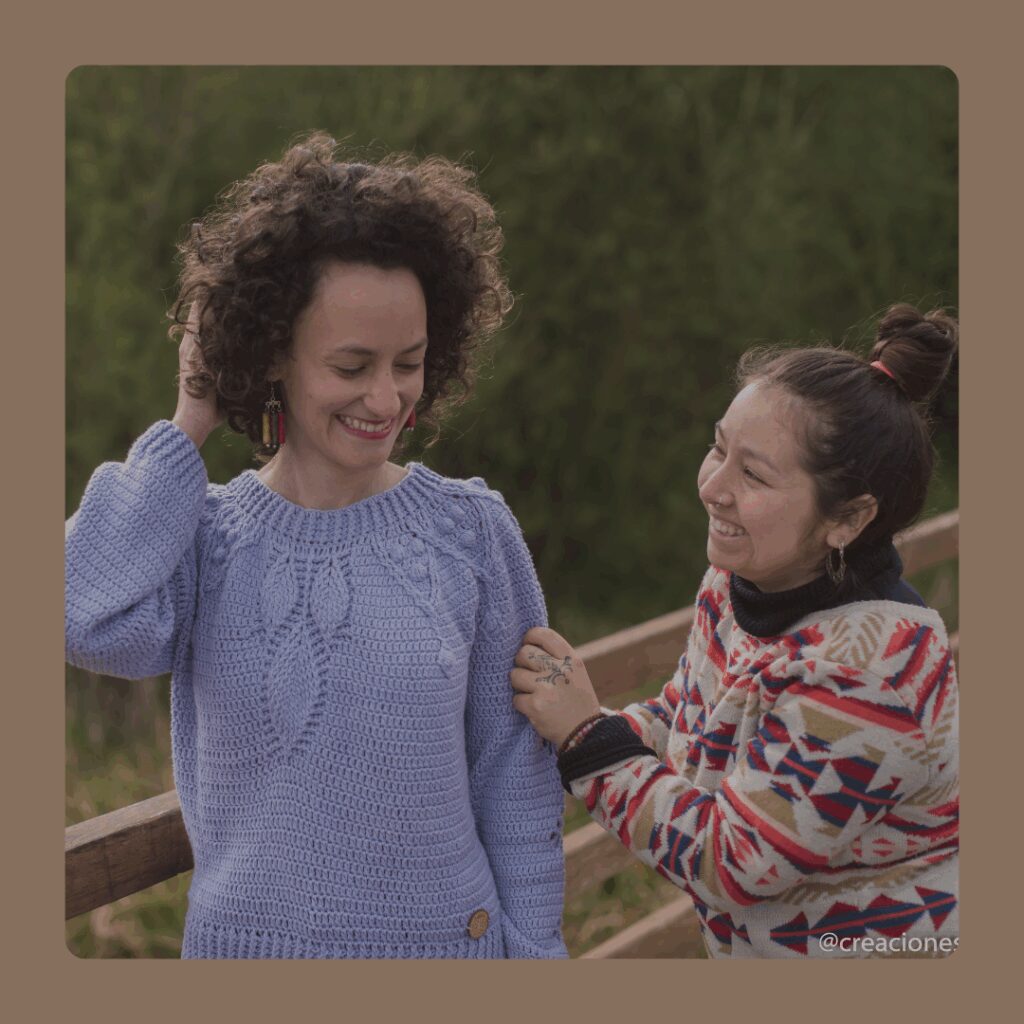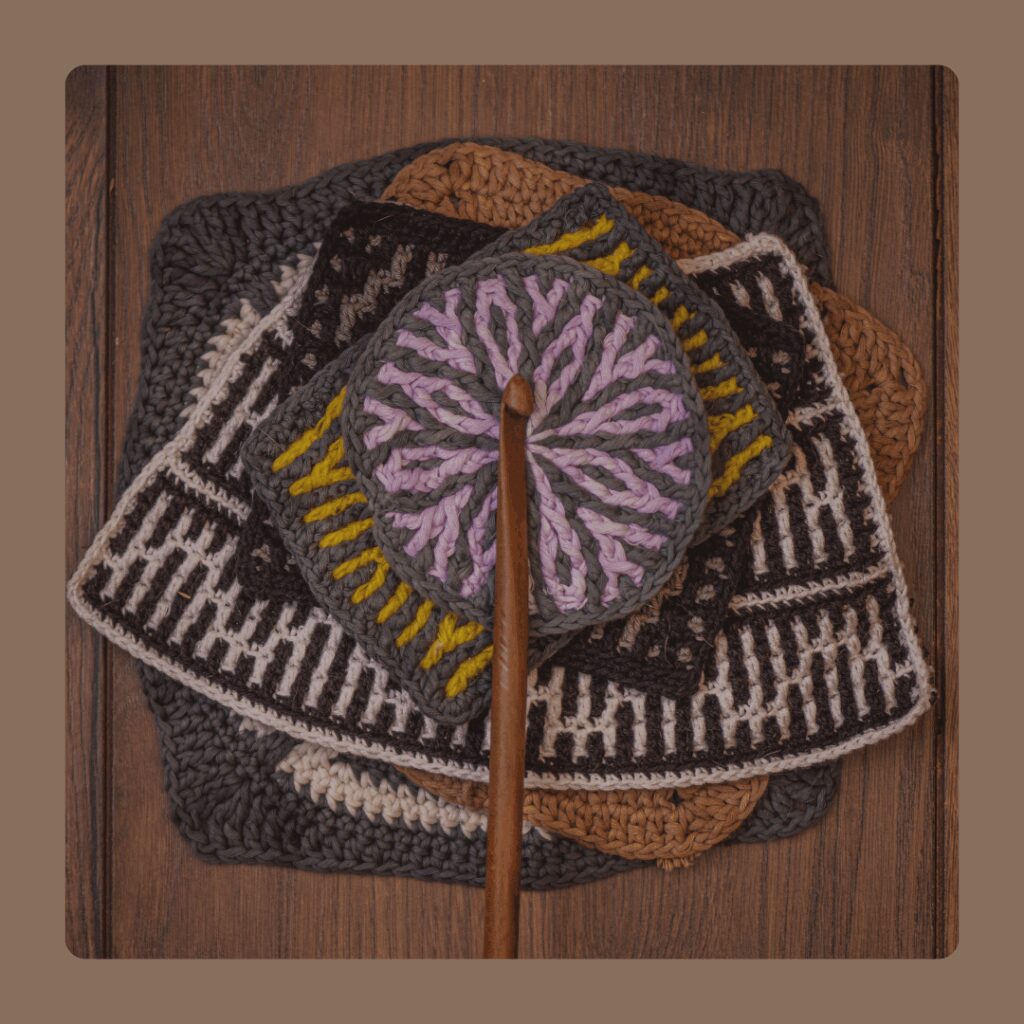
Hay una magia especial en el colorwork en crochet: una mezcla de técnica, intuición y expresión artística que transforma puntos simples en historias vibrantes. Para muchas tejedoras, trabajar con varios colores se convierte en algo más que una habilidad; se convierte en un lenguaje. Una forma de decir algo con el hilo que no siempre se puede expresar con palabras.
There is a special kind of magic in crochet colorwork: a blend of technique, intuition, and artistic expression that transforms simple stitches into vibrant stories. For many makers, working with multiple colors becomes more than a skill; it becomes a language. A way of saying something with yarn that cannot always be expressed in words..
¿Qué es exactamente el colorwork en crochet?
Aunque es un término muy usado en el mundo del tejido, no siempre queda claro qué significa.
El colorwork es cualquier técnica de crochet donde se utilizan dos o más colores dentro del mismo proyecto para crear patrones, diseños o motivos.
No se trata solo de cambiar de color entre filas, si no que implica trabajar con varios colores dentro del mismo tramo de tejido, alternándolos estratégicamente para formar dibujos.
En otras palabras: si el color participa activamente en la construcción del diseño (ya sea líneas, figuras, texturas, repeticiones o contrastes), entonces es colorwork.
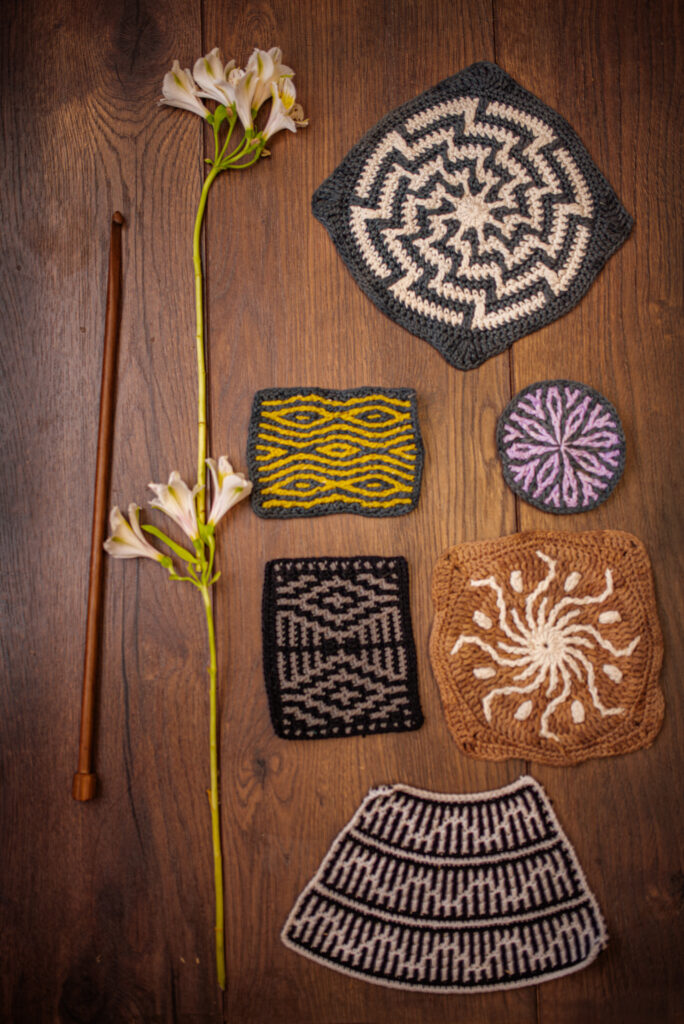
What Exactly Is Colorwork?
Even though “colorwork” is a common term in the fiber arts world, not everyone knows what it truly means.
Colorwork refers to any crochet (or knitting) technique where two or more colors are used within the same project to create patterns, motifs, shapes, or visual designs.
It’s not just changing colors between rows: It’s working with multiple colors within a row or section to form the actual structure of the design.
Put simply: if the color is actively shaping the pattern (through contrasts, motifs, lines, or repeated sequences), then it’s colorwork.
¿Por qué el colorwork es tan especial?
El colorwork no se trata solo de seguir un patrón: se trata de encontrar armonía. Cada paleta transmite algo. Elegir los colores suele ser el primer paso del proceso creativo y define todo lo que vendrá después.
Trabajar punto a punto, viendo cómo los motivos aparecen bajo tus manos, se siente casi meditativo. El tejido crece despacio, revelando su personalidad y carácter.
Cada técnica de colorwork tiene su propio ritmo y aspecto. Pero todas comparten algo: requieren atención. No se pueden apurar.
Why colorwork feels so special
Colorwork is not just about following instructions. it’s about finding harmony. Every palette carries something special. Choosing colors is often the first creative step, setting the tone for the entire project.
Working stitch by stitch, watching motifs appear beneath your fingers, feels almost meditative. The fabric grows slowly, revealing its personality and voice.
Each technique of colorwork has its own rhythm and appearance. But they all share one thing: they require presence. You cannot rush colorwork.
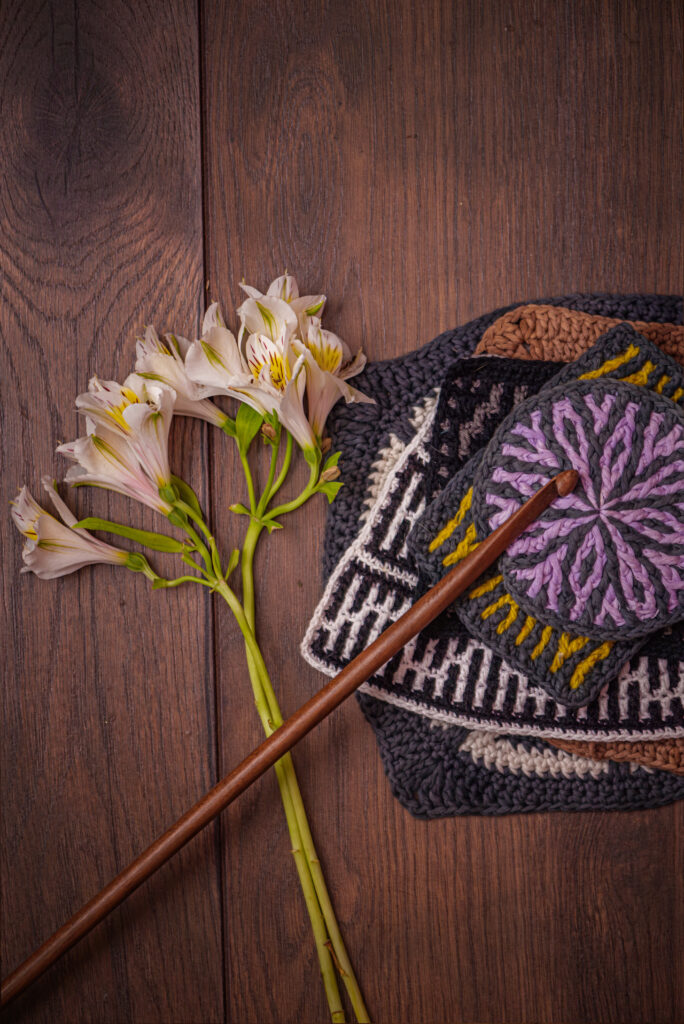
Técnicas que dan vida al color
Una de las razones por las que el colorwork es tan cautivador es la variedad de formas de abordarlo y a continuación te cuento algunas de las técnicas más conocidas del colorwork:
Techniques that bring color to life
One of the reasons colorwork is so captivating is the wide range of techniques available and now I tell you about some of them
Mosaico crochet
El mosaico crochet usa un color por vez, cambiando de color cada una (overlay mosaic) o dos filas (inset mosaic) y combinando puntos bajos con puntos altos para crear diseños geométricos muy llamativos.
Aunque se ve complejo, es fácil de seguir porque nunca se llevan los hilos por dentro del tejido.
Es perfecto para sweaters
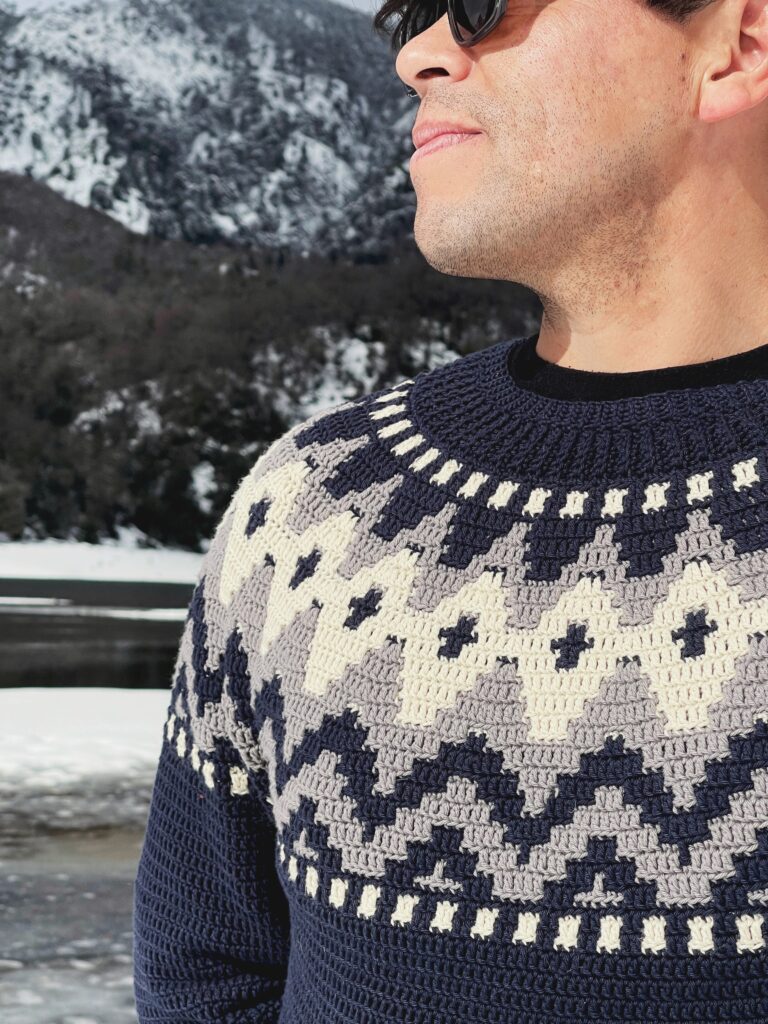
Mosaic Crochet
Mosaic crochet uses one color at a time, switching colors every two rows (inset mosaic) o one row (overlay mosaic), and combining single crochet stitches with double crochet stitches to create bold geometric designs.
It looks complex but is very easy to follow because you never carry yarn inside the fabric.
Perfect for patterns with high contrast.
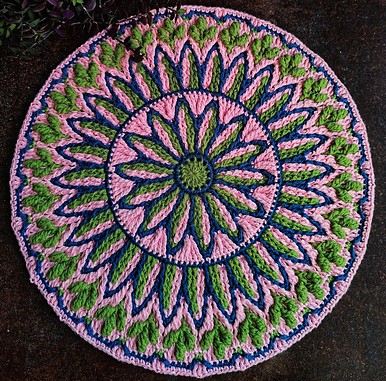
Overlay crochet
El overlay crochet construye capas de puntos sobre filas anteriores, creando diseños texturizados, profundos y casi “tallados”.
Suele usar puntos en relieve para agregar detalle y dimensión.
Es ideal para mandalas, paneles decorativos y piezas donde el color y la textura deben destacar.
Overlay Crochet
Overlay crochet builds layers of stitches on top of previous rows, creating rich, textured, almost carved-looking designs.
It often uses front-post stitches to add depth and detail.
Overlay is great for mandalas, panels, statement pieces, and any project where texture and color need to stand out.
Tapestry crochet
El tapestry crochet trabaja con dos o más colores en la misma fila, llevando los colores que no se usan en el momento, dentro del tejido.
Esto crea un tejido denso, firme y con figuras muy definidas.
Se usa mucho para bolsos, canastos, gorros y diseños con bordes nítidos.
Tapestry Crochet
Tapestry crochet involves working with two or more colors in the same row while carrying the unused colors inside the stitches.
This creates a dense, sturdy fabric with very crisp shapes, perfect for motifs.
Commonly used for bags, baskets, hats, and colorwork with sharp edges.
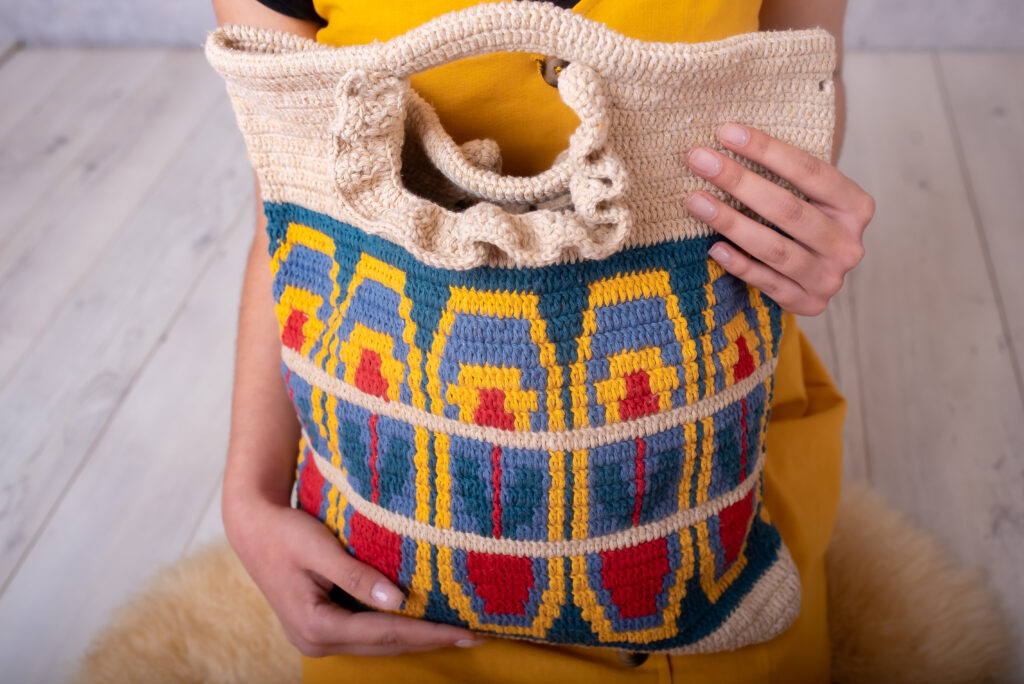
Intarsia en crochet
Visualmente similar al tapestry pero la intarsia crochet usa secciones separadas de color sin llevar por dentro los hilos a lo largo de la fila.
Cada bloque de color tiene su propio ovillo o mini ovillo.
Es ideal para figuras grandes, áreas limpias de color y diseños geométricos modernos, y queda más liviano que el tapestry porque no lleva hilos escondidos dentro del tejido.
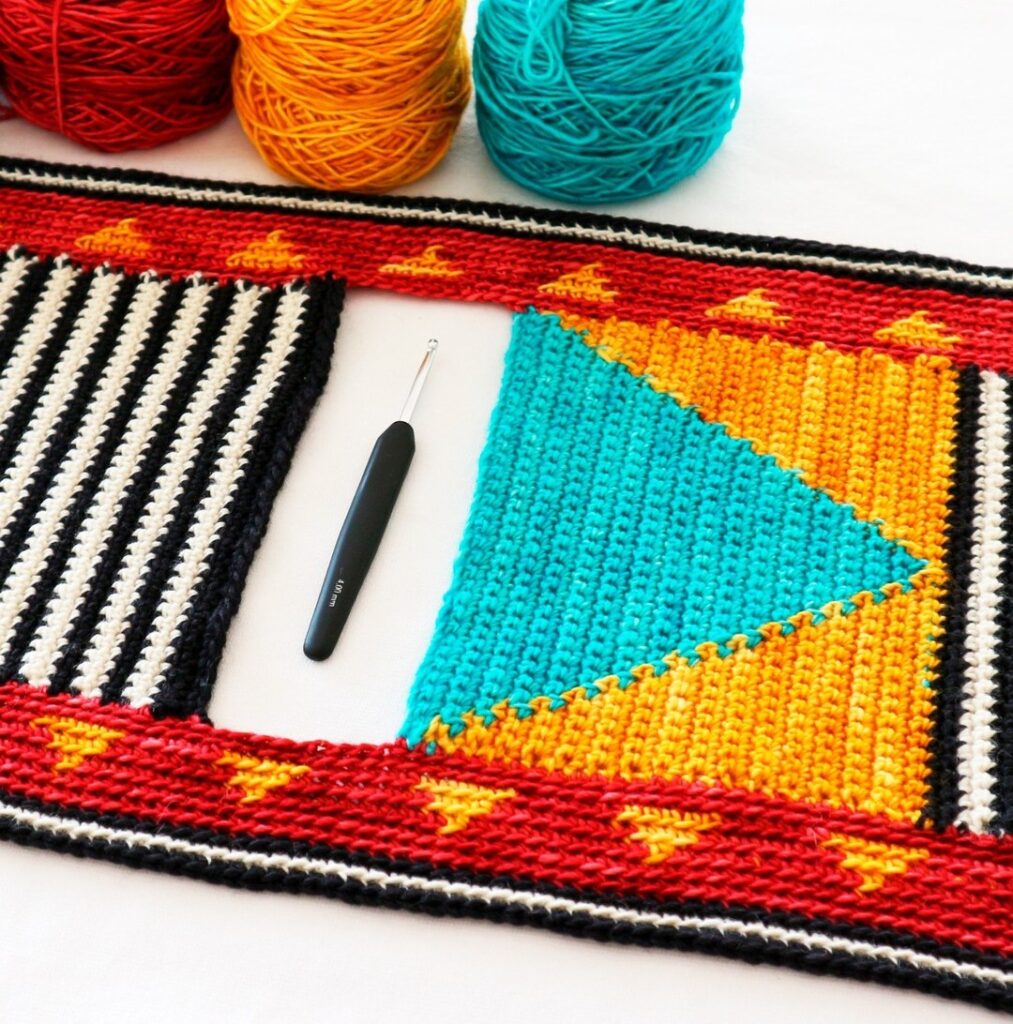
Intarsia Crochet
It looks like pretty much as tapestry, but ntarsia crochet uses separate sections of color without carrying the yarn across the row.
Each color block has its own little yarn source, making it ideal for large shapes, clean areas of color, or modern geometric designs.
It’s lighter than tapestry because no yarn is carried inside the fabric.
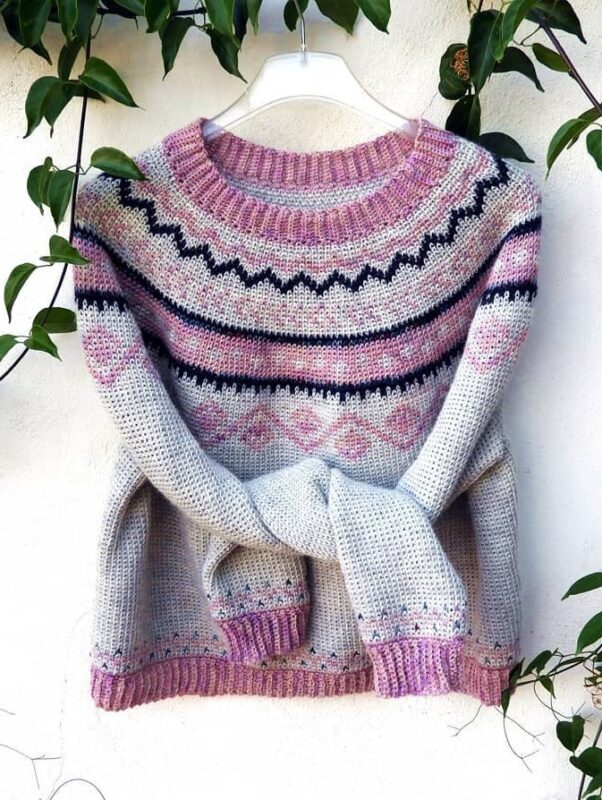
Fair Isle crochet
Adaptado del tejido tradicional a dos agujas. En crochet, “fair isle” implica que trabajas con dos colores por vuelta y arrastras el color que no usas por detrás del trabajo (floats).
En esta técnica el color que no estás usando queda «flotando» por detrás, los cambios de color suelen ser más repetitivos y frecuentes (porque tienen patrones pequeños y rítmicos), y por esto produce un tejido con menos elasticidad. Una característica es que se suele usar «waistcoat stitch» (punto bajo centrado, el que se ve como una “V”).
Fair Isle in crochet
Adapted from traditional knitting. In crochet, fair isle means working with two colors (or more) per round while carrying the unused color behind the work (creating floats).
In this technique, the color you’re not using stays “floating” on the wrong side. Color changes tend to be more repetitive and frequent (because the motifs are small and rhythmic), which results in a fabric with less elasticity.
A distinctive feature is that it’s often worked using the waistcoat stitch (centered single crochet, the one that looks like a “V”).
Interlocking crochet
El interlocking crochet trabaja dos capas de tejido al mismo tiempo (generalmente en dos colores) que se entrelazan entre sí mientras avanzas.
El resultado es liviano, reversible y con diseños geométricos u ópticos muy llamativos.
Cada color forma su propia “malla”, y esas dos mallas se van uniendo en puntos específicos para crear el diseño.
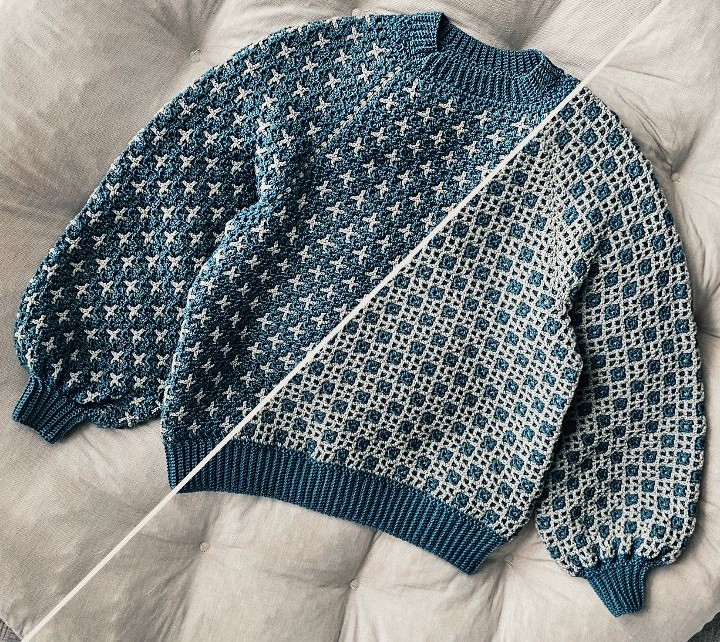
Interlocking Crochet
Interlocking crochet is a technique where you work two layers of fabric at the same time (usually in two colors ) and these layers interlace with each other as you go.
It looks complex, but the idea is simple: each color forms its own mesh, and the two meshes “lock” together in specific places to form the pattern.
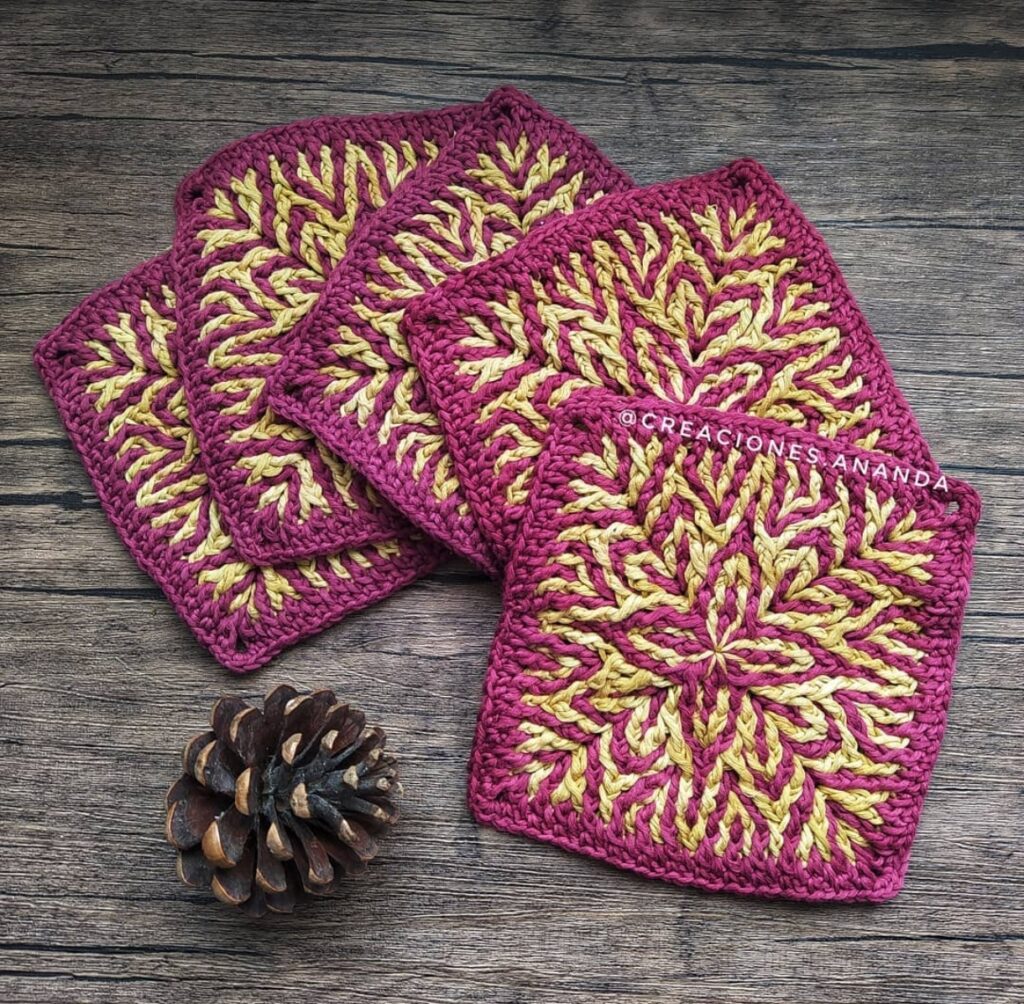
Brioche crochet
El brioche crochet crea una tela acolchada, gruesa y con canalé, inspirada en el brioche del tejido a palillos.
Funciona apilando puntos de forma que se forman relieves profundos, y queda especialmente hermoso en dos colores.
El diseño suele quedar para un sólo lado, por lo que no reversible. Ideal para proyectos donde se quiera mucha textura.
Brioche Crochet
It’s inspired by brioche knitting. It creates a thick, squishy, ribbed fabric that looks beautiful in two colors.
The structure is made by stacking stitches in a way that forms deep ridges, giving the fabric a soft, cushioned texture.
El colorwork es una conversación entre tonos. Cuando juntas dos (o más) colores, inmediatamente ocurre algo: se complementan, se armonizan, chocan o se potencian. El hilo te habla, te guía, y tú respondes con cada decisión!
Por eso el colorwork conecta tan profundo con quienes lo practican. Une lo técnico con lo emocional, lo racional con lo intuitivo.
Un concepto que sigue evolucionando
A pesar de los siglos de tradición textil, el colorwork en crochet sigue transformándose. Diseñadoras y artesanas de todo el mundo prueban nuevas paletas, nuevos patrones y nuevas formas de narrar a través del color. Cada pieza suma algo nuevo al universo del crochet.
Para mí, el colorwork es un recordatorio de por qué me enamoré del tejido: la exploración constante, la creatividad sin límites y la belleza que aparece, inevitablemente, punto a punto.
Si nunca lo has probado, este puede ser tu momento. Y si ya lo practicas, sabes bien: una vez que el color entra en tu crochet, no hay vuelta atrás.
Colorwork feels like a dialogue. When you place two (or more) colors together, something happens: they harmonize, contrast, vibrate, calm each other, or bring out unexpected shades. The yarn guides you as much as you guide it.
That’s why colorwork resonates so deeply. It connects the technical with the emotional, the structured with the intuitive.
A concep that continues to evolve
Even with centuries of textile tradition behind us, crochet colorwork continues to evolve. Designers and makers around the world experiment with new palettes, new ideas, and new ways of telling stories through color. Every project adds something new to the craft, a fresh perspective, a new combination, a spark of inspiration.
For me, colorwork is a reminder of why I fell in love with crochet: the endless possibility, the joy of exploration, and the beauty that slowly unfolds, stitch by stitch.
If you’ve never tried colorwork before, this might be the perfect moment to begin.
And if it’s already part of your practice, then you know: once color becomes part of your crochet, there’s no turning back.
El crochet es tan infinitamente diverso que, quién sabe, tal vez una nueva técnica de colorwork ya esté en el horizonte, esperando ser descubierta por alguien como tú.
Me encantará saber qué piensas y cuál es tu técnica favorita. ¡Te leo en los comentarios!
Crochet is so endlessly diverse that who knows! maybe a brand-new colorwork technique is already on the horizon, waiting to be discovered by someone just like you.
I’d love to hear what you think and which technique is your favorite. Let me know in the comments!